


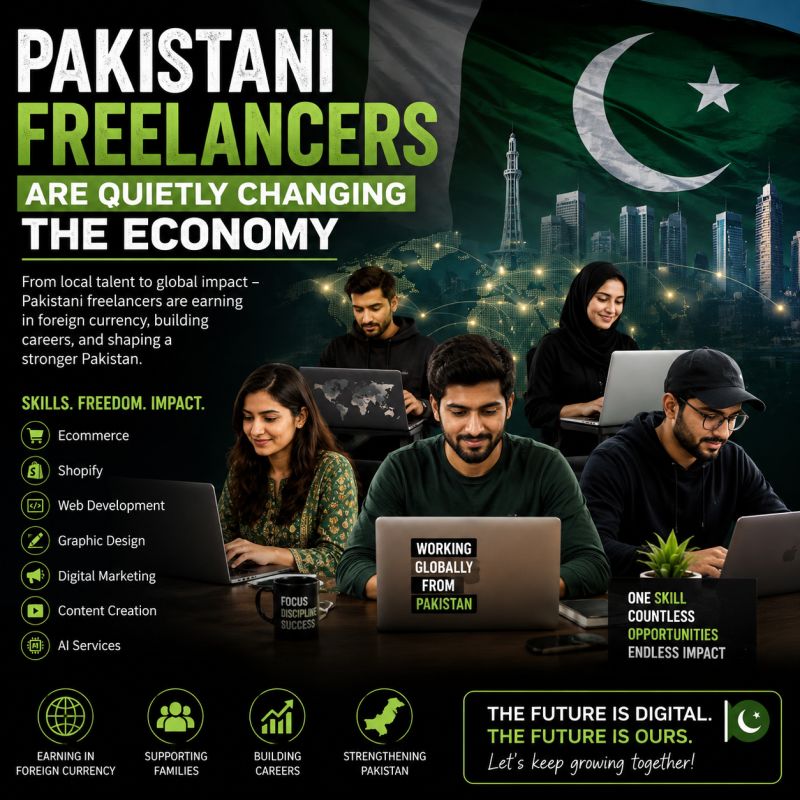
How Pakistani Freelancers Are Transforming the Economy
Pakistan is rapidly emerging as one of the world’s fastest-growing freelance economies, and the impact of freelancers on the country’s digital landscape is becoming impossible to ignore. What was once considered a small side hustle or part-time online earning opportunity has now transformed into a powerful economic force. Today, thousands of Pakistani freelancers are working with international clients, building online businesses, and generating income from global markets — all while sitting in their homes with just a laptop, internet connection, and professional skills.
Freelancing in Pakistan has opened doors for people from all backgrounds. Students, professionals, stay-at-home individuals, and even people living in smaller cities are now earning online through digital platforms. This shift has created new opportunities that were previously unavailable to many talented individuals. Instead of depending only on traditional jobs, people are now building careers independently through skills like Ecommerce, Shopify development, web development, graphic design, digital marketing, content creation, SEO, video editing, AI services, and virtual assistance.
One of the biggest reasons behind this growth is the global demand for digital services. Businesses worldwide are moving online and constantly looking for affordable, skilled, and reliable professionals. Pakistani freelancers have gained recognition for their creativity, technical expertise, dedication, and competitive pricing. As a result, international clients are increasingly hiring talent from Pakistan for projects related to websites, online stores, branding, advertising, automation, and digital business growth.
Over the last few years, Pakistan has witnessed a remarkable digital transformation, and at the center of this change stands a powerful and rapidly growing community — freelancers. What was once considered a small side income opportunity has now become a major source of employment, financial independence, and economic growth for the country. Pakistani freelancers are no longer just working online for extra income; they are building businesses, supporting families, creating jobs, and contributing millions of dollars to the national economy.
Today, freelancing in Pakistan is changing lives. Across cities, towns, and even remote villages, talented individuals are connecting with global clients and providing digital services to companies worldwide. From Ecommerce and Shopify to Web Development, Graphic Design, Digital Marketing, SEO, Content Creation, AI Services, Video Editing, and Virtual Assistance, Pakistan’s youth are proving that skills and determination can open doors to unlimited opportunities.
One of the most inspiring aspects of this digital revolution is that many successful freelancers started with very limited resources. For most people, the journey began with only a laptop, internet connection, and a willingness to learn. They watched YouTube tutorials, enrolled in online courses, practiced for months, built portfolios, and slowly entered the international freelance market. What started as a small effort eventually turned into a stable career and, for many, a life-changing source of income.
Pakistan is now recognized globally as one of the fastest-growing freelance markets in the world. International companies and startups are increasingly hiring Pakistani freelancers because of their creativity, technical expertise, communication skills, and cost-effective services. Freelancers from Pakistan are building websites, running advertising campaigns, managing online stores, designing brand identities, editing videos, writing content, and developing digital solutions for clients from the United States, United Kingdom, Canada, Australia, UAE, and many other countries.
The rise of Ecommerce has played a major role in this growth. Thousands of Pakistani freelancers are now working in Shopify development, Amazon services, dropshipping, product research, Facebook Ads management, and online store management. Ecommerce has opened massive opportunities for young entrepreneurs who want to work independently and build online businesses. Many freelancers are not only serving clients but also launching their own stores and brands.
Shopify, in particular, has become one of the most popular platforms among Pakistani freelancers. Skilled developers and marketers are helping international businesses build professional online stores, optimize user experiences, and generate sales through digital advertising. The demand for Shopify experts continues to grow, creating endless opportunities for individuals who invest time in learning this skill.
Web development is another field where Pakistani freelancers have established a strong reputation. WordPress developers, frontend designers, backend developers, and full-stack engineers from Pakistan are creating modern, responsive, and high-performing websites for businesses around the world. Many freelancers specialize in custom WordPress development, landing page design, website optimization, and UI/UX design. These services are in high demand because every business today needs an online presence.
Graphic design has also become a major income source for freelancers in Pakistan. Businesses worldwide constantly need logos, social media graphics, branding materials, packaging designs, and advertising creatives. Pakistani designers are competing successfully in the global market because of their creativity and ability to deliver quality work at affordable rates. Many talented designers have built strong personal brands and now work with international agencies and established companies.
Digital marketing is another rapidly expanding field that is empowering freelancers across the country. Businesses today rely heavily on social media, SEO, Google Ads, Facebook Ads, email marketing, and content strategies to attract customers and increase sales. Pakistani digital marketers are helping companies grow online through effective advertising campaigns and data-driven marketing strategies. SEO experts are improving website rankings on search engines, while social media managers are helping brands connect with audiences worldwide.
Content creation has become one of the most influential skills in the modern digital world. Writers, bloggers, scriptwriters, video editors, YouTubers, and social media creators are building successful careers online by creating valuable and engaging content. Pakistani content creators are now reaching global audiences and generating income through freelancing platforms, social media monetization, affiliate marketing, and personal brands.
Artificial Intelligence (AI) and automation services are also creating exciting opportunities for freelancers in Pakistan. As AI technology continues to evolve, businesses are searching for professionals who can use AI tools for automation, content generation, workflow optimization, customer support, and digital productivity. Freelancers who learn AI-related skills today are likely to become highly valuable in the coming years. The future of freelancing will strongly depend on how quickly individuals adapt to modern technologies and changing industry demands.
Freelancing is not only helping individuals earn money but also creating a positive impact on Pakistan’s economy. Freelancers bring foreign income into the country, which supports economic growth and strengthens the digital sector. Every successful freelancer working with international clients contributes valuable foreign exchange that benefits the national economy. In many households, freelance income has improved financial conditions, supported education, covered medical expenses, and created better living opportunities for families.
Another important impact of freelancing is employment generation. Many successful freelancers eventually build teams and agencies, hiring other skilled individuals to manage projects and clients. This creates new job opportunities and helps grow the digital workforce. Small freelance businesses are turning into full-service digital agencies that provide web development, branding, SEO, marketing, and Ecommerce services to clients globally.
Freelancing has also transformed the mindset of the younger generation in Pakistan. In the past, many people believed success only came through government jobs or traditional employment. Today, young professionals understand that skills are more valuable than degrees alone. The internet has created a global marketplace where anyone with expertise and dedication can build a career regardless of their location or background.
Educational institutions and training centers are also slowly adapting to this digital shift. More students are learning technical and digital skills alongside their formal education. Online learning platforms, YouTube tutorials, and digital communities are making it easier than ever for people to access knowledge and improve their abilities. Self-learning has become one of the strongest tools for success in the freelance industry.
However, freelancing also comes with challenges. Competition in the global market is increasing every day, and freelancers must continuously improve their skills to stay relevant. Communication, professionalism, consistency, time management, and client satisfaction are extremely important for long-term success. Many beginners struggle at first because freelancing requires patience, discipline, and continuous learning. Success does not happen overnight, but those who remain committed eventually build strong careers.
Internet access and technology infrastructure remain challenges in some areas of Pakistan. Slow internet connections, power shortages, and limited digital resources can affect productivity for freelancers. Despite these difficulties, Pakistani freelancers continue to prove their resilience and determination by competing successfully on global platforms.
One of the biggest reasons behind the success of Pakistani freelancers is adaptability. The digital world changes rapidly, and successful freelancers constantly learn new tools, technologies, and trends. Those who adapt quickly to market demands are able to grow faster and build sustainable careers. Skills related to AI, automation, Ecommerce, digital marketing, app development, cybersecurity, and data analysis are expected to become even more valuable in the future.
Freelancing has also encouraged entrepreneurship among Pakistani youth. Instead of only working for clients, many freelancers are now creating their own brands, online businesses, and digital products. Some launch Ecommerce stores, while others create online courses, software solutions, marketing agencies, or personal brands. This entrepreneurial mindset is helping Pakistan move toward a more modern and innovation-driven economy.
Women in Pakistan are also benefiting significantly from freelancing opportunities. Many women who previously had limited access to traditional workplaces are now building successful online careers from home. Freelancing has created flexible work opportunities that allow women to earn independently while managing personal responsibilities. This is contributing positively to financial empowerment and social development.
Social media has played a huge role in promoting freelancing culture in Pakistan. Platforms like LinkedIn, Facebook, Instagram, YouTube, and TikTok have inspired thousands of people to explore online earning opportunities. Freelancers share success stories, educational content, business tips, and motivational experiences that encourage others to start their own journeys.
The future of freelancing in Pakistan looks incredibly promising. As global businesses continue shifting online, the demand for digital services will keep increasing. Remote work is becoming more common, and companies are now comfortable hiring professionals from different countries. This creates enormous opportunities for skilled individuals in Pakistan to work globally without leaving their homes.
In the coming years, the most successful freelancers will likely be those who combine technical expertise with creativity, communication, and adaptability. Skills alone are important, but problem-solving abilities, professional behavior, and personal branding will also play major roles in long-term growth.
Pakistan’s digital economy is still in its early stages, but the progress so far has been impressive. Freelancers are helping reshape the country’s image by proving that Pakistani talent can compete at the highest international level. They are not waiting for opportunities — they are creating them.
This movement is bigger than online earning. It is about empowerment, independence, innovation, and transformation. Freelancers are changing not only their own lives but also the future of Pakistan’s economy. They are building careers, supporting families, generating employment, and bringing global recognition to Pakistani talent.
As someone working in Ecommerce and Shopify, I truly believe the future belongs to people who continuously learn, improve their skills, and adapt to technology. The internet has removed many traditional barriers and created opportunities for anyone willing to work hard and stay consistent.
The opportunities online today are greater than ever before. Whether it is AI services, Ecommerce, web development, digital marketing, or content creation, the digital world is full of possibilities for those who are ready to learn and grow.
Pakistani freelancers are no longer quietly participating in the global economy — they are becoming one of the driving forces behind the country’s digital future. 🚀

Author
zrm_solutions
ZRM Solutions stands proudly as the No. 1 Software and Web Development agency in Pakistan, delivering cutting-edge digital solutions that power businesses of all sizes. Known for its innovation, reliability, and client-first approach, ZRM Solutions has become the go-to technology partner for startups, SMEs, and enterprise-level organizations across Pakistan and beyond. With a growing portfolio of successful systems across diligence like fabrics, logistics, manufacturing, healthcare, ande-commerce, ZRM results has earned a character for quality, translucency, and invention.