Over 8 years we help companies reach their financial and branding goals. ZRM Solutions is a values-driven technology agency dedicated.

Gallery

Contacts

Street No 27, Shafiq Colony Madina Road, Gujrat, Pakistan

zrmsolutions@gmail.com

+92331-6903935
+92305-4156158

News

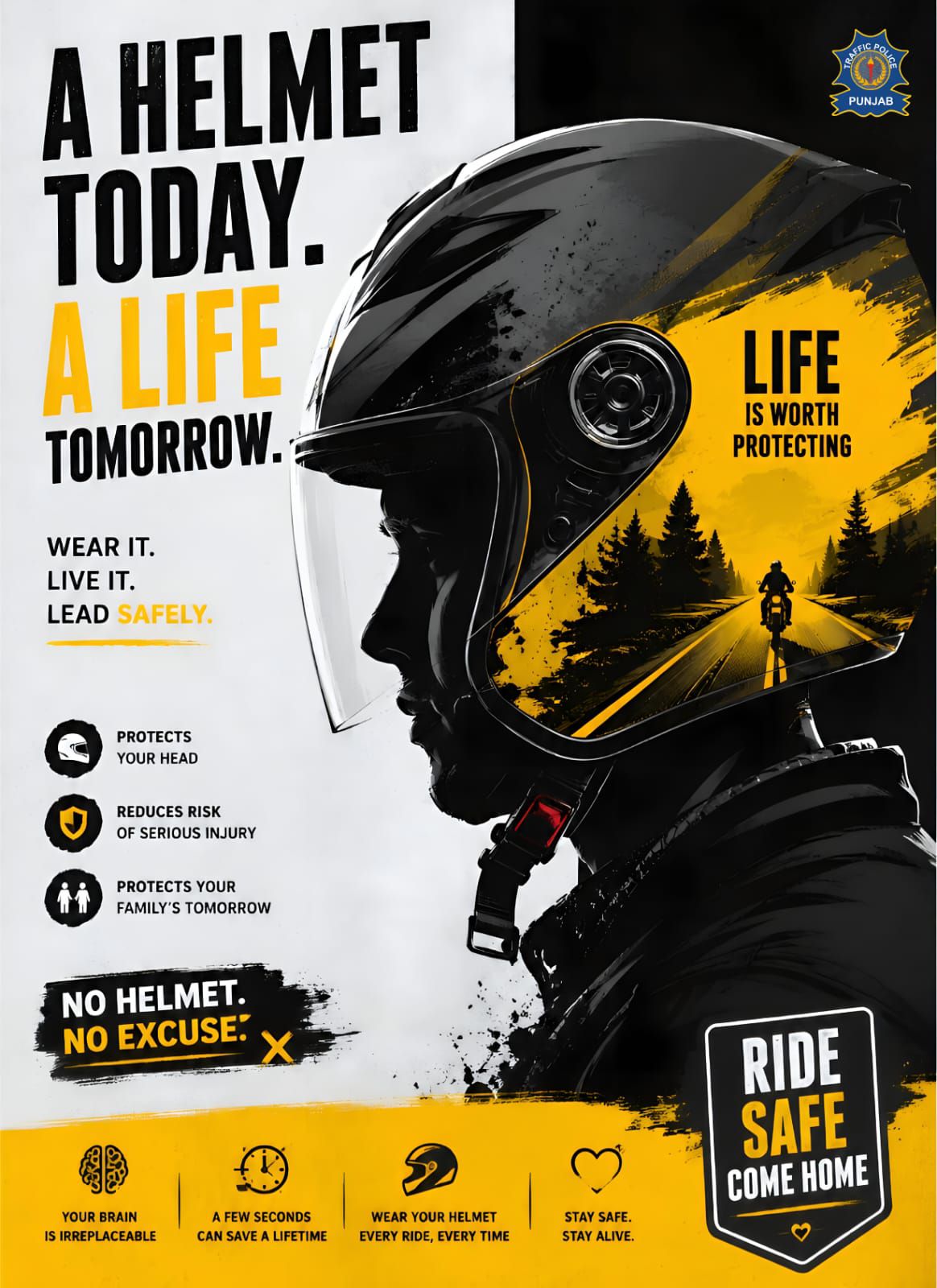
Helmet Saves Lives – Make Safety Your Priority

Road safety is one of the most important responsibilities for every individual. Every day, thousands of people travel on motorcycles for work, education, and personal activities. However, many riders ignore essential safety measures while driving. Among all protective equipment, the helmet is considered the most important because it plays a major role in protecting human life. Wearing a helmet during travel is not just a traffic rule; it is a lifesaving habit that can protect riders from serious injuries and accidents.

Motorcycle accidents are one of the leading causes of injuries and deaths on roads. In most accidents, severe head injuries become the main reason for fatalities. A helmet acts as a protective shield that reduces the impact on the head and protects the brain during accidents. Even a minor collision can become dangerous if a rider is not wearing a helmet. On the other hand, a quality helmet can significantly reduce the chances of serious injury and save lives. This is why traffic safety experts strongly recommend wearing helmets at all times during travel.

Many people, especially young riders, often avoid wearing helmets for short distances or nearby travel. They think accidents only happen on highways or during long journeys. In reality, accidents can happen anytime and anywhere. A few moments of carelessness can lead to lifelong consequences. Therefore, whether the journey is short or long, wearing a helmet should always be a priority.

Governments and traffic police departments around the world continuously promote helmet awareness campaigns to reduce road accidents and protect citizens. Through seminars, social media campaigns, advertisements, and traffic regulations, people are encouraged to understand the importance of road safety and helmet use. Traffic laws requiring helmets are created not to inconvenience riders but to ensure their safety and protect precious human lives.

Helmets are not only important for motorcycle drivers but also for passengers sitting behind them. In many cases, only the rider wears a helmet while the passenger remains unprotected. This practice is equally dangerous because both individuals are at risk during an accident. Everyone traveling on a motorcycle should wear a helmet to ensure complete safety.

Choosing a good-quality helmet is also very important. Low-quality or damaged helmets may not provide proper protection during accidents. Riders should always use helmets that meet safety standards, fit properly, and are comfortable to wear. The helmet strap should also be securely fastened to ensure the helmet stays in place during sudden impacts.

Wearing a helmet reflects responsibility and awareness. A responsible rider not only protects their own life but also sets a positive example for others. Parents should teach children about traffic safety and the importance of helmets from an early age so future generations become more disciplined and safety-conscious citizens.

Apart from safety, helmets also protect riders from dust, wind, sunlight, insects, and harsh weather conditions during travel. Modern helmets are designed to provide comfort while ensuring maximum protection. Today, many stylish and lightweight helmets are available that combine safety with comfort and appearance, encouraging more people to use them regularly.

Road accidents can happen unexpectedly, but taking preventive measures can reduce their impact. A helmet is one of the simplest yet most effective ways to stay safe while riding a motorcycle. It only takes a few seconds to wear a helmet, but those few seconds can save an entire life.

The motorcycle represents freedom, efficiency, and economic mobility for millions of individuals globally. In developing nations and bustling urban centers alike, two-wheelers form the backbone of daily transportation, navigating traffic congested corridors where traditional automobiles stall. Yet, this incredible convenience comes with an inherent vulnerability. Unlike passengers wrapped in the reinforced steel cage, crumple zones, and airbag systems of a modern car, a motorcyclist is entirely exposed to the physical forces of the road.

When an accident occurs, the laws of physics are unforgiving. In a collision, the rider is frequently thrown from the vehicle, turning their own body into a projectile. The single most critical line of defense between life and permanent disability—or worse—is a certified protective helmet. Choosing to wear a helmet is not merely an act of legal compliance; it is a profound declaration of personal responsibility, a commitment to your loved ones, and the most effective safety decision a rider can make.

1. The Anatomy of Protection: How a Helmet Works

A common misconception is that a helmet is simply a hard plastic shell designed to keep your head from cracking open. While the outer layer is essential, a high-quality helmet is actually a highly engineered piece of life-saving technology consisting of multiple components working in perfect synergy.

  • The Rigid Outer Shell: Usually constructed from high-impact polycarbonate, fiberglass, carbon fiber, or Kevlar. This tough outer layer is designed to prevent sharp objects from penetrating the skull and to distribute the concentrated force of an impact over a much broader surface area. It also acts as a shield against abrasion, protecting your skin and face from friction burns if you slide across asphalt.

  • The Impact-Absorbing Liner: Situated directly beneath the outer shell, this layer is composed of high-density Expanded Polystyrene (EPS) foam. This foam is the true hero of the helmet. When your head hits the ground, the EPS liner crushes under the pressure, absorbing and dissipating the kinetic energy that would otherwise shock your brain.

  • The Comfort Padding: The soft fabric layer that rests against your skin. While its primary job is to ensure a snug, comfortable fit, it also plays an important role in keeping the helmet stable at high speeds and absorbing sweat to maintain clear vision.

  • The Retention System (Chinstrap): A helmet is only useful if it stays on your head during a crash. The chinstrap and its fasteners are engineered to withstand extreme pulling forces, ensuring the helmet remains locked in place during complex, multi-tiered impacts.

2. The Biomechanics of Injury Mitigation

To fully appreciate why a helmet is indispensable, one must understand what happens to the human body during a sudden deceleration event.

  • The Brain’s Internal Collision: Your brain does not sit tightly inside your skull; it floats in cerebrospinal fluid. When a moving motorcycle hits an obstacle, the bike stops instantly, but inertia keeps the rider moving. If an unhelmeted rider’s head strikes the pavement, the skull stops moving immediately upon impact. However, the soft brain inside violently slams against the hard interior walls of the skull.

  • Preventing Traumatic Brain Injuries (TBI): This internal impact causes contusions, tearing of brain tissue, and internal bleeding—collectively known as a Traumatic Brain Injury. By introducing an EPS foam liner, a helmet extends the deceleration window by fractions of a second. This tiny delay dramatically reduces the peak forces transferred to the brain, turning a fatal concussive force into a survivable impact.

  • Combating Diffuse Axonal Injury (DAI): When a head hits the road at an angle, it often rotates violently. This rotational acceleration can twist and tear the long connecting nerve fibers (axons) in the brain, leading to permanent vegetative states or long-term cognitive damage. Modern helmets are increasingly engineered with technologies like MIPS (Multi-directional Impact Protection System) to absorb rotational forces and minimize DAI.

3. Debunking Common Myths Surrounding Helmet Use

Despite overwhelming scientific proof that helmets save lives, several persistent myths continue to circulate among riders, leading to tragic, preventable losses.

  • Myth #1: “Helmets block my peripheral vision and hearing.”

    • The Reality: International safety standards require all approved helmets to provide at least 210 degrees of peripheral vision, which is well beyond the normal visual field required to notice side traffic. Furthermore, while helmets reduce deafening wind noise (which actually protects your hearing over time), they do not prevent a rider from hearing crucial auditory cues like car horns, sirens, or approaching engines.

  • Myth #2: “In a bad crash, a helmet will cause a broken neck.”

    • The Reality: Extensive epidemiological studies of thousands of traffic accidents show exactly the opposite. Riders wearing helmets are significantly less likely to suffer cervical spine injuries compared to unhelmeted riders. The protection of the skull far outweighs any theoretical leverage applied to the neck.

  • Myth #3: “I’m only riding a short distance at low speed, so I don’t need one.”

    • The Reality: Statistics prove that a vast majority of serious motorcycle accidents occur within a few miles of the rider’s home, often at speeds under 30 miles per hour (50 km/h). A fall from a stationary bicycle can fracture a human skull if it hits concrete at the wrong angle; speed does not determine your vulnerability to head trauma.

4. Selecting the Right Helmet: Standards and Fit

Not all helmets are created equal. Buying a cheap, novelty helmet from an unverified vendor provides a false sense of security without offering any meaningful protection during a crash.

  • Look for Verified Safety Certifications: Always verify that your helmet meets recognized international safety standards. Look for designations such as DOT (Department of Transportation standard in the US), ECE 22.05 / 22.06 (Economic Commission for Europe standard, widely regarded as highly rigorous), or Snell certification. These stamps indicate the model has undergone stringent lab testing against impact drop-tests and penetration thresholds.

  • Prioritize Full-Face Coverage: While open-face or half-helmets are popular for comfort, accident data shows that approximately 35% of all major crash impacts occur directly on the chin and jaw area. A full-face helmet offers the only complete protection wrapper for your entire face, eyes, and jawline.

  • Achieving the Perfect Fit: A helmet should fit snugly all around your head without causing painful pressure points. It should not shake, twist, or roll off when you move your head side-to-side. If you can easily pull the helmet off from the back while the chinstrap is fastened, it is too large and will fail you in an accident.

5. The Broader Economic and Social Ripple Effect

The decision to ride without a helmet is often framed as a matter of personal choice. In truth, the consequences of that choice ripple outward, severely impacting families, healthcare systems, and national economies.

  • Reducing the Emergency Burden: Hospital data consistently shows that helmeted crash victims require fewer days in intensive care units, reducing the overall financial burden on public emergency services.

  • Preserving Young Labor Forces: The demographic most likely to ride motorcycles—and conversely, the most likely to skip wearing helmets—is young adults aged 15 to 35. Protecting this demographic keeps the core economic workforce intact and productive.

  • Fostering a Culture of Compliance: When parents, older siblings, and community leaders visibly prioritize helmet safety, they instill vital civic habits in the next generation, driving down long-term national traffic mortality rates.

Ultimately, your life is too valuable to risk for the sake of convenience, hairstyle preservation, or peer pressure. Every time you swing your leg over a motorcycle, remember that the road is unpredictable, and mistakes by other drivers are outside your control. Make safety your absolute priority: strap on a certified, full-face helmet, protect your future, and ride with the confidence that you are prepared for whatever lies ahead.

Author

zrm_solutions

ZRM Solutions stands proudly as the No. 1 Software and Web Development agency in Pakistan, delivering cutting-edge digital solutions that power businesses of all sizes. Known for its innovation, reliability, and client-first approach, ZRM Solutions has become the go-to technology partner for startups, SMEs, and enterprise-level organizations across Pakistan and beyond. With a growing portfolio of successful systems across diligence like fabrics, logistics, manufacturing, healthcare, ande-commerce, ZRM results has earned a character for quality, translucency, and invention.

Leave a comment